Hypersonic Acoustic Impulse Therapy
Non-invasive acoustic wave healing, no needles required.
What Is Shockwave?
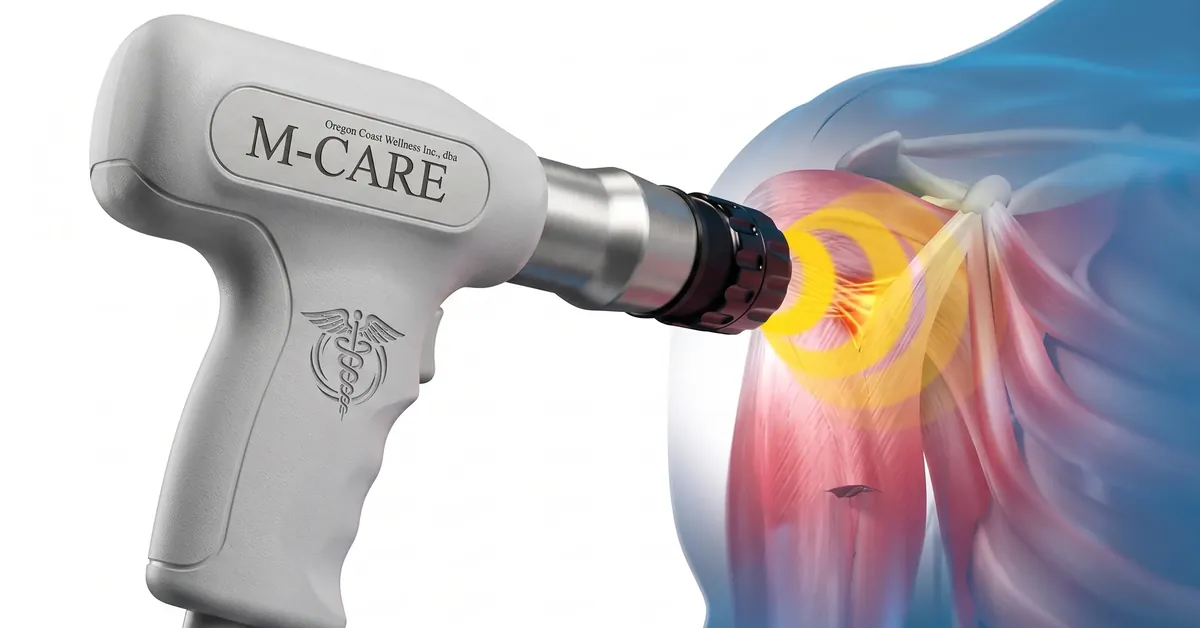
A shockwave is not an electric shock; it is an acoustic wave generated by a small controlled explosion surrounded by water, transmitted through coupling gel deep into target tissue. The unique waveform creates microporation, triggering your body's natural healing cascade.
How It Works
At the focal zone, pressure pulses create cavitation (microbubbles expand and implode), resulting in microporation. This focused acoustic wave technology triggers a biological response, driving cell proliferation, new blood vessel growth, collagen production, and a shift from chronic to regenerative repair.
Conditions Treated
- Musculoskeletal pain & arthritis
- Tendonitis (all types)
- Peripheral neuropathy
- Nerve regeneration
- Erectile dysfunction
- Blood vessel health
- Wound & bone healing
- Carpal tunnel syndrome
- Stress urinary incontinence
- Vulvodynia & dyspareunia
- Peyronie's disease
- Scar reduction
What Shockwave Therapy Achieves
New Blood Vessel Growth
Stimulates the creation of new micro-vessels (angiogenesis) to deliver oxygen and nutrients to damaged tissue. [2]
Collagen Strengthening
Shifts tissue from weak, damaged fibers to strong, healthy collagen, improving structural integrity. [3]
Pain Signal Reduction
Reduces pain-signaling proteins (substance P) and desensitizes nerve fibers for lasting relief. [1]
Stem Cell Activation
Recruits natural stem cells to the treatment site to accelerate the repair of tendons and ligaments. [3]
Anti-Inflammatory Shift
Transitions the body from a state of chronic inflammation to a regenerative healing response. [2]
Nerve Fiber Repair
Promotes the regrowth of protective nerve coatings and axonal fibers for peripheral nerve recovery. [6]
Ultrasound vs. Shockwave Waveforms
Acoustic therapies differ fundamentally in their pressure profiles. Continuous ultrasound utilizes symmetric, low-pressure oscillations, while focused shockwave generates an instantaneous, extremely high-pressure impulse.
Continuous Acoustic Wave (Ultrasound)
Diagnostic and therapeutic ultrasound use continuous or long-pulsed sinusoidal waves. The pressure oscillates symmetrically between positive and negative phases in the micro-Pascal (μPa) or low mega-Pascal range. This creates gentle thermal and non-thermal oscillations.
Focused Shockwave (LI-fESWT)
Focused shockwave therapy generates a single, extremely high-pressure acoustic pulse (10–100 MPa) within nanoseconds, followed by a short tensile phase. This high-amplitude gradient is what triggers mechanical cell signaling (mechanotransduction) and cavitation.
Frequently Asked Questions
Is shockwave therapy painful?
Most patients describe it as a firm tapping sensation. The treatment is non-invasive and requires no anesthesia. Discomfort is typically mild and temporary.
How many sessions are needed?
Most conditions respond well to 3–6 sessions spaced 1 week apart. Dr. McDougall will recommend a treatment plan specific to your condition.
Are there side effects?
Side effects are minimal: mild redness, slight swelling, or temporary tenderness at the treatment site. These typically resolve within 24–48 hours.
How is this different from ultrasound therapy?
Shockwave therapy uses focused, high-pressure acoustic pulses (10–100 MPa) that create cavitation and mechanotransduction, fundamentally different physics than diagnostic or therapeutic ultrasound.
Ready to Try Shockwave?
Call to schedule your consultation with Dr. McDougall and find out if shockwave is right for your condition.
Book a Consultation: 541-813-1797